From safari brief to client-ready proposal
A worked, illustrative example of organising a safari brief, checking missing details and preparing a branded proposal.
Published · Updated
This is a fictional training example showing a review process. It is not a customer testimonial, a bookable itinerary or evidence of time saved.
The starting brief
Two adults want a private safari. They have named several parks but have not confirmed dates, flight details, budget or room preferences. The sales team has a previous itinerary and a costing sheet.
The previous itinerary can help with structure. Its hotels, room categories and rates must not silently become the new client’s booking details.
Step 1: organise facts and unanswered questions
| Known from the brief | Still to confirm |
|---|---|
| Two adults | Travel dates and flight details |
| Private safari requested | Vehicle arrangement and guide language |
| Several parks of interest | Route feasibility, nights and current costs |
| Existing reference itinerary | Accommodation, room category and availability |
Ask for the missing operational details before treating the draft as ready to book. Keep unanswered questions visible to the person preparing the quote.
Step 2: build the daily structure
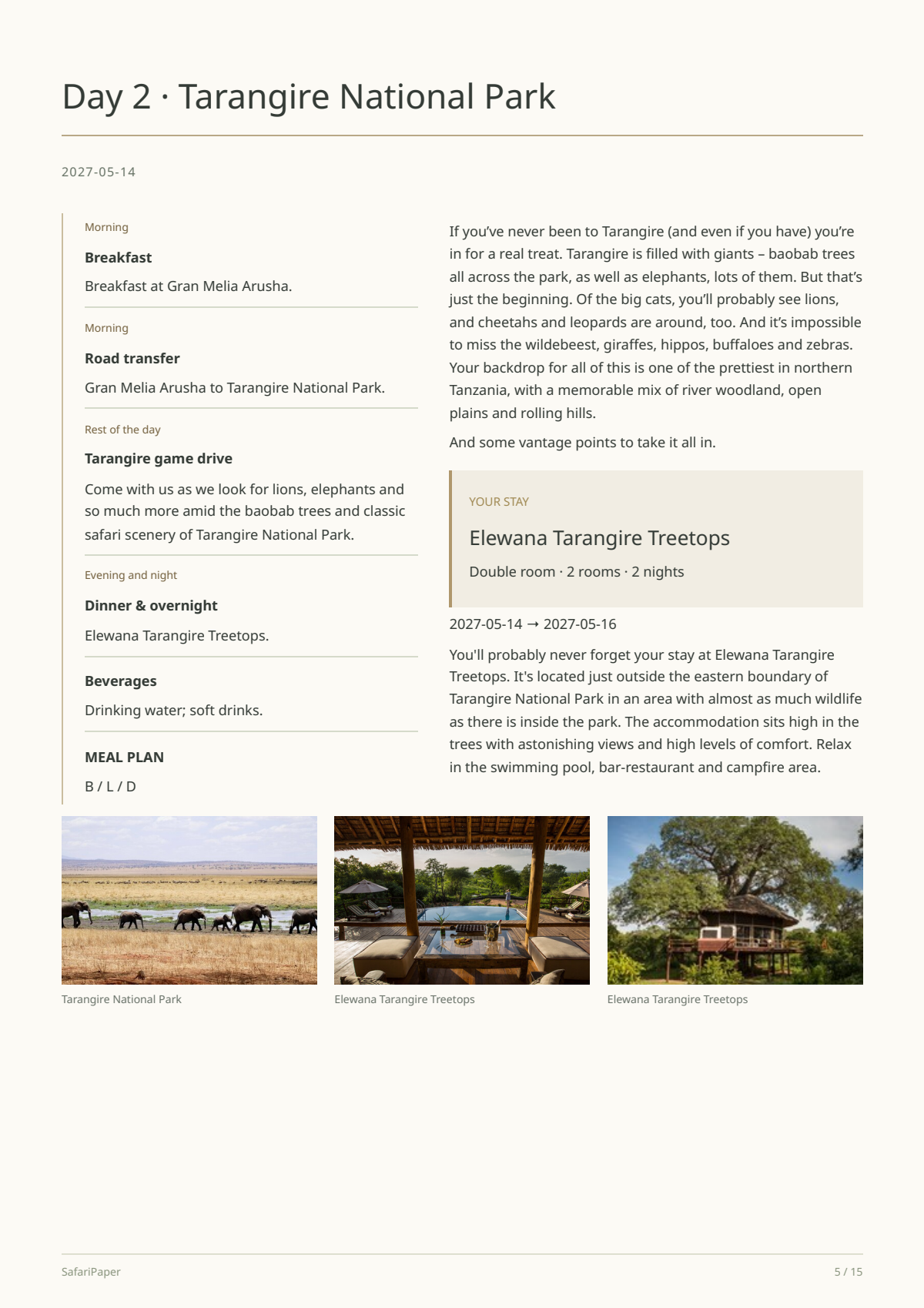
Give each day a location, activity, transport plan, overnight stay and meal plan. Compare the number of nights and the final transfer with the enquiry. Have your operations team check driving and activity feasibility rather than relying on a decorative map or generated description.
Step 3: review the commercial details
Confirm the currency, price basis, guest breakdown, optional services, inclusions, exclusions and terms. Reconcile the proposal with the costing sheet. Any change to dates, guests or accommodation calls for a pricing review.
Step 4: present the reviewed proposal
In Safari Paper, start from an existing document, create from scratch or use Quick Quote. Review the itinerary, review the price, select one of the three designs, and check the exported PDF and online preview. Layout and wording are presentation choices; the operator remains responsible for the travel facts and booking terms.
What would make this a real case study?
Permission to use the agency’s material, a documented starting version, a reviewed final version and measured outcomes. Until those exist, a demonstration should be labelled as a demonstration. We make no claim here about faster quoting or increased bookings.
Bring the reviewed details into your own design.
Explore the templates or create your proposal in Safari Paper.